
HOA Amenity Decks and Clubhouses: Specifying an Azenco Pergola That Survives Board Turnover
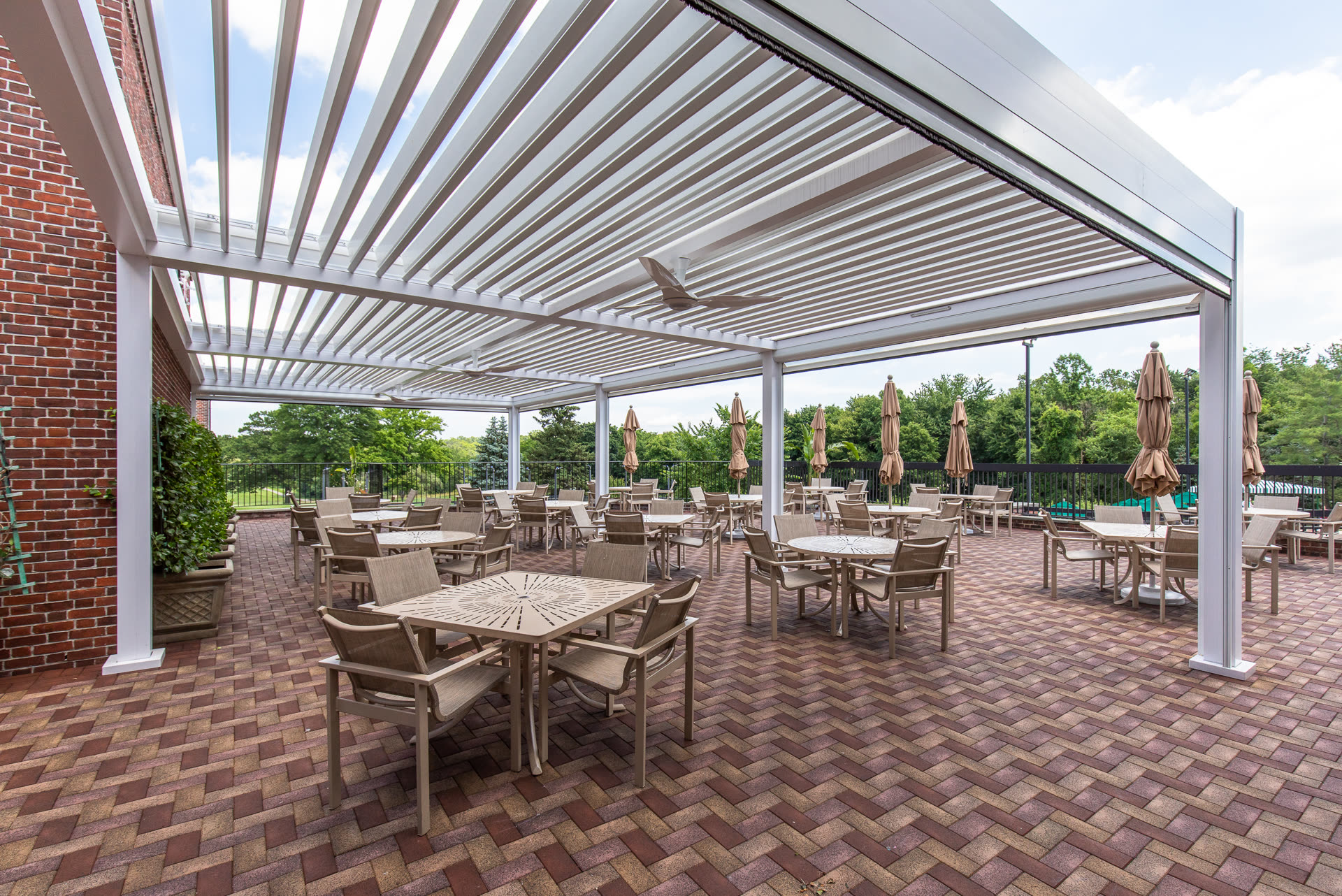
Austin-area HOAs and property management firms are running into a specific specification problem on amenity decks and clubhouses: whatever gets installed will outlast the board that approved it. Two or three board turnovers later, no one on the current committee remembers the vendor, the warranty, or the maintenance plan. The specification has to survive that turnover, or the community carries the cost of a mid-life replacement it should never have needed.
The specification has to survive the reserve study
HOAs in Texas are required to maintain reserve studies that project capital replacement schedules and funding requirements. Standard reserve studies assume useful-life ranges for shading and amenity structures — typically 15–25 years for a specification-grade aluminum structure and 5–10 years for fabric or timber alternatives (Community Associations Institute).
An aluminum louvered pergola with a Miami-Dade NOA structural certification and a 190 mph wind rating sits at the long end of that useful-life curve. That maps directly to a lower monthly reserve contribution per unit — the board can point to the specification when residents ask why the shading line item is smaller than expected in the reserve funding plan.
What the amenity deck actually needs
Three functional requirements drive the specification on an amenity deck or clubhouse patio:
- Weather-closable roof. A pool deck cover that cannot close for a summer thunderstorm evacuates residents to the clubhouse interior every time the weather changes. Louvers that rotate closed and route rainwater through concealed gutters keep the amenity in service through most of the storm envelope.
- Integrated lighting. Overhead LED lighting on the same structure eliminates the second contract for a separate lighting install and gives the board a single warranty to manage. Motion-scheduled or timer-driven lighting is a common resident amenity request.
- No annual maintenance surprises. Powder-coated aluminum does not need staining, sealing, or replacement fabric. The annual inspection is a visual walkthrough for anchorage integrity, not a maintenance work order.
Why bioclimatic louvers, not a solid roof, on an HOA amenity
Solid amenity covers create heat traps in the Central Texas summer. Residents avoid the amenity between 2:00 and 7:00 p.m. and utilization drops. Bioclimatic louvers rotate to intercept direct solar radiation while venting hot air convectively through the louver gaps — the perceived-temperature drop underneath is meaningful (Azenco Outdoor).
The counterintuitive result is that a shaded but ventilated amenity gets more resident use in July and August than a fully covered one. Utilization is the metric the board should track post-install — because higher utilization is what makes the reserve funding conversation defensible over time.
Anchorage and drainage on an existing amenity deck
Retrofitting a louvered pergola onto an existing pool deck or clubhouse patio typically starts with the anchorage engineering. The R-BLADE anchor detail supports slab-mount and knee-wall attachment. The engineering package confirms the anchor type against the existing structural condition — slab thickness, reinforcement, or knee-wall composition — before install (ICC Evaluation Service).
Drainage is the second coordination item. Concealed gutters inside the R-BLADE assembly route water through the posts to grade. On an amenity deck, that discharge point has to be coordinated with the existing site drainage — a downspout emptying into resident foot traffic is a fixable design error before install, not after.
Resident utilization and the amenity story
Amenity investments only pay off if residents actually use them. Post-install utilization tracking on covered amenity decks in Central Texas consistently shows a shift toward mid-day and early-evening use during summer — hours that were previously dead on an uncovered deck. Boards that track amenity utilization as a leading indicator for renewal rates and community satisfaction can point to the pergola investment as one of the highest-utilization improvements on the reserve schedule.
Hail resistance and the insurance renewal conversation
Central Texas hail exposure is a real underwriting concern for HOA master policies. Aluminum louvered assemblies with published hail-impact ratings are documented on the specification for the insurance file. The 190 mph wind rating on the R-BLADE addresses the second underwriting question. Both numbers keep the amenity structure out of the "unrated auxiliary" category on the master policy schedule.
Where CCSI fits
Construction Component Sales Inc. is the CCSI-side Azenco representative for HOA amenity projects across Texas. On an HOA specification, that means the reserve-study-friendly submittal, engineering package, and installation coordination arrive as a single deliverable the board can adopt without cross-referencing three separate vendors. See the full CCSI pergolas product line.
Frequently asked questions
How does a specification-grade pergola change the reserve study?
An aluminum louvered pergola with a 15–25 year useful-life projection extends the replacement horizon on the reserve study, which lowers the monthly per-unit contribution required to fund the eventual replacement.
Can the pergola be added to an existing amenity deck?
Usually yes. The R-BLADE anchor detail supports slab-mount and knee-wall attachment. Confirmation happens with the existing structural drawings in hand.
Does the HOA need a separate lighting contract for overhead LED?
No. Integrated LED lighting mounts to the same aluminum frame and is included on the pergola submittal, so the board manages one warranty rather than two.
How is the insurance master policy affected?
Published wind and impact ratings keep the pergola out of the unrated auxiliary category on the master policy schedule, which stabilizes the amenity line item across renewal cycles.
Looking for a product or a quote?
Tell us about your project and we'll help you source the right building product.