
Sasquatch on Commercial Roofs: Debris, Ember Exposure, and the Hangerless Install Case
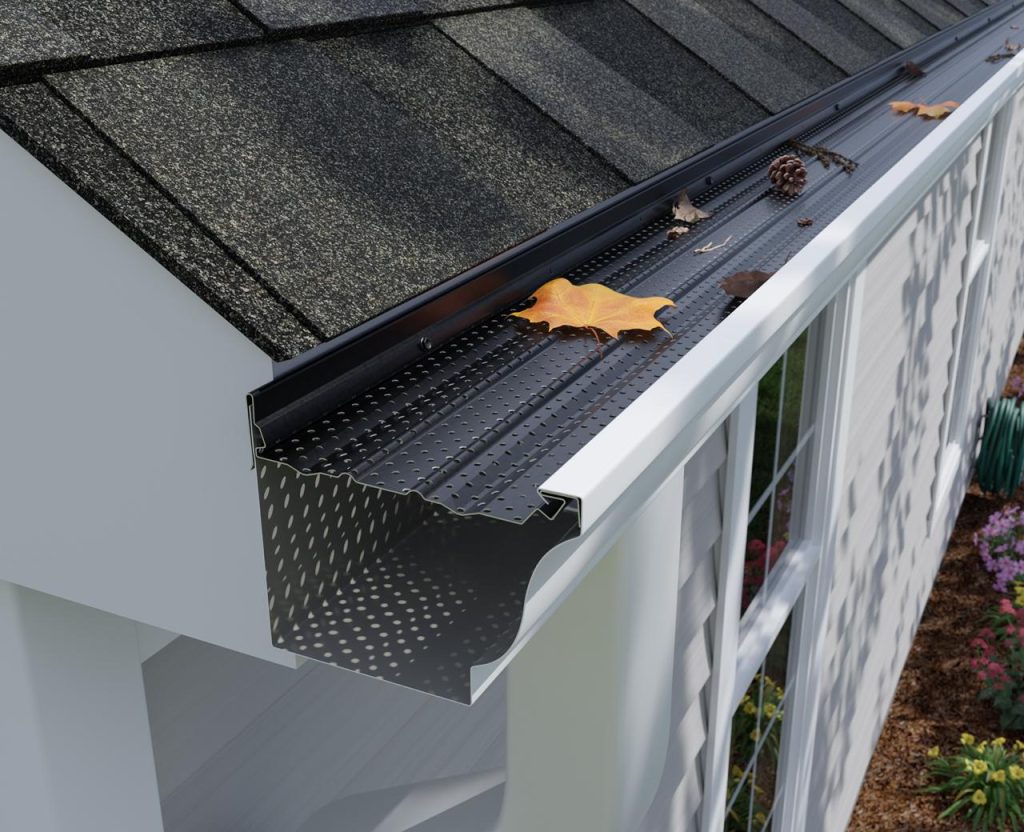
Texas commercial roofs collect debris in a way residential roofs do not. Warehouse and big-box parapets pond leaves and grit in dead corners. Multifamily balconies drop trash into shared gutter runs. Post-storm windrows deposit shingle granules and vegetation into every trough on the property. On top of that, wildland-urban interface exposure keeps pushing east from the Hill Country and west from the pine belts. Property managers, general contractors, and roofing contractors specifying gutter protection in Texas are solving a debris problem and an ember problem at the same time.
The Sasquatch hangerless gutter guard, manufactured by E-Z Gutter Guard, is a category answer to both.
What "hangerless" actually means on a commercial install
Traditional gutter guards drop into the gutter, catch on the front hem, and rely on internal hangers for structural support. On a commercial run, that means every hanger location becomes a potential failure point — hangers loosen, guards sag, debris pooling starts, water backs up under the roof edge.
Sasquatch inverts the load path. The front edge locks into the gutter's front hem. The back edge attaches directly to the fascia via a patent-pending rear screw ledge (E-Z Gutter Guard). The structure of the roof carries the guard, not the gutter. On a 400-foot commercial run, that eliminates dozens of internal hanger points and moves the fastening line to the strongest member of the assembly.
The debris problem in Texas commercial specification
Two debris profiles dominate:
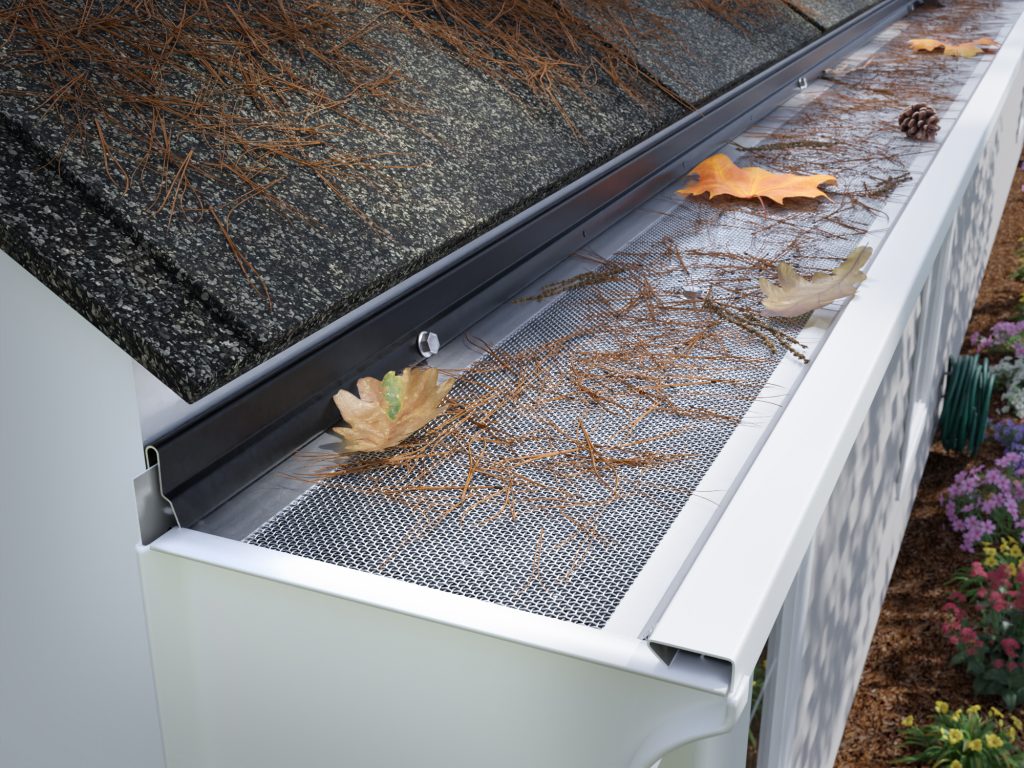
- East Texas pine and oak. Long needles and small acorns get past most drop-in perforated guards. They lodge in the perforations and mat over the top. Sasquatch's aluminum cover with the optional Fine Debris Filter shifts the load from the perforations to a screen layer that sheds needles rather than trapping them.
- Post-storm shingle granules and vegetation. High-wind events strip granules off asphalt shingles and pack them into the gutter channel underneath a conventional guard. The rigid hangerless profile of Sasquatch resists the deformation that lets granules slip through and lets water sheet across the top of the cover.
The commercial economics matter here. Gutter cleaning on a Class-A retail center or a 20-building multifamily portfolio runs six figures annually for a large property management firm. A gutter protection product that shifts that scope to periodic top-surface rinses rather than internal excavation changes the operating budget.
Ember exposure and the WUI question
Texas' wildland-urban interface has expanded steadily. Insurance Services Office and state fire marshal mapping now flag counties along the I-35 corridor, Hill Country, and the East Texas pine belt as elevated WUI risk (Texas State Fire Marshal's Office). Ember cast — wind-blown embers that ignite dry roof debris hundreds of feet ahead of a fire front — is the leading structure-ignition path in WUI events (NIST).
Sasquatch meets ASTM E2768 (30-minute flame spread) and ASTM E2886 (ember intrusion) — the two standards insurance underwriters and commercial specifiers reference when quoting WUI-adjacent commercial properties. That means a Sasquatch-protected roof edge does not become the ignition point when embers land on the assembly.
Why property managers are standardizing on the specification
The single-SKU decision is the operational win. Two widths (5″ and 6″), one profile, black finish, two thickness options (.019″ standard and .022″ Arctic Extreme heavy-duty), and a lifetime limited transferable warranty. A property management firm running a 40-building portfolio can spec the same product across every roof edge, brief the same maintenance protocol to every crew, and hand the transferable warranty to a buyer at disposition without a punch list of legacy guard products to reconcile.
What changes for the roofing GC
The install profile matters to the trade doing the work. Traditional drop-in guards force the roofer or gutter installer to work from inside the gutter, which means walking each hanger, positioning the guard, and hoping the internal fit is right for the run. Hangerless installation moves the workflow to the fascia line, where the roofer is already fastening drip edge and the gutter contractor is already setting the gutter itself. That reduces coordination friction on a job with tight sequencing.
Roofing GCs in Texas increasingly list a specific gutter protection line in their specification manuals. Standardizing on a Sasquatch line item means the GC prices consistently across bids, avoids product substitution disputes with owners, and can attach the manufacturer's transferable warranty to the punch list at closeout.
Where CCSI fits
Construction Component Sales Inc. is the CCSI-side E-Z Gutter Guard representative for Texas commercial projects. Property managers, general contractors, roofing contractors, and HOA boards work with CCSI to spec Sasquatch across single roofs and multi-building portfolios. See the full CCSI E-Z Gutter Guard product line for related options.
Frequently asked questions
Is Sasquatch a gutter or a gutter cover?
A gutter cover. Sasquatch is a hangerless aluminum protection system that installs over an existing gutter. It does not replace the gutter itself.
Does Sasquatch install on any gutter profile?
It fits standard K-style gutters at 5-inch and 6-inch widths. The front edge locks into the front hem of the gutter and the back edge screws directly to the fascia.
Which thickness should a Texas commercial project spec?
The .019-inch high-strength aluminum standard is the default for most projects. The .022-inch Arctic Extreme heavy-duty thickness is worth specifying on WUI-exposed properties or in areas with severe hail exposure.
Is the ASTM certification recognized by insurance underwriters?
Yes. ASTM E2768 flame-spread and ASTM E2886 ember-intrusion certifications are the standards commercial underwriters reference for WUI-adjacent risk pricing.
Looking for a product or a quote?
Tell us about your project and we'll help you source the right building product.