
Pine Needles, Oak Pollen, and the Fine Debris Filter: When to Spec It on a Texas Commercial Roof
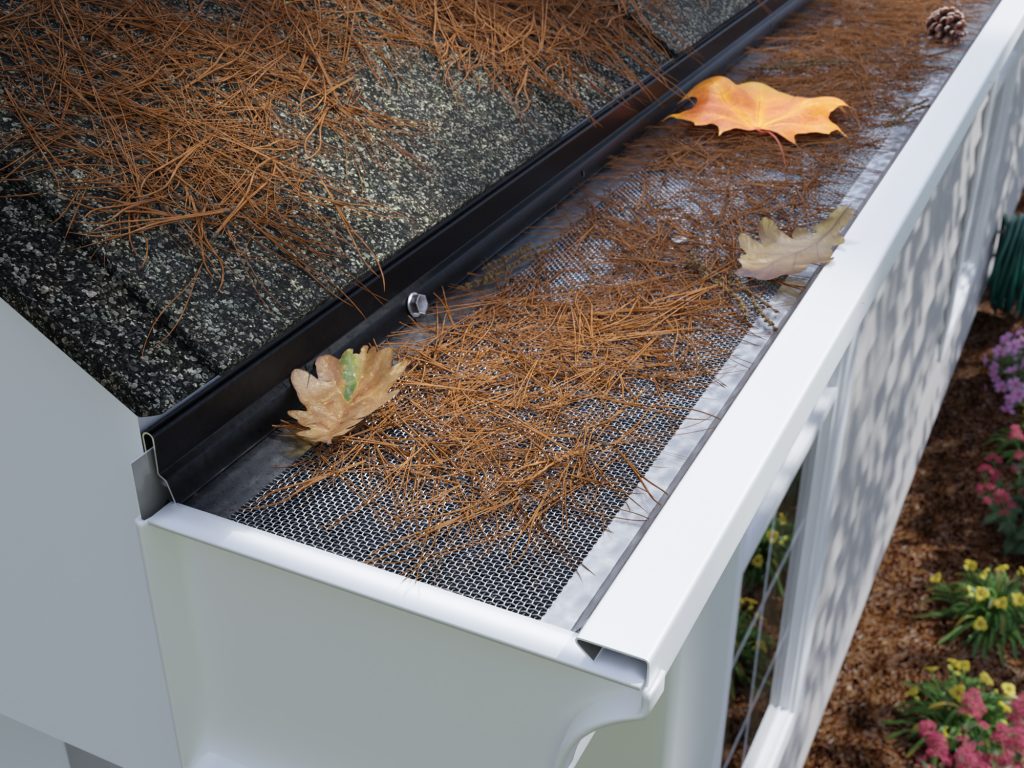
The default Sasquatch specification handles most Texas commercial debris profiles — leaves, small twigs, granule wash from asphalt shingles. But there is a subset of properties where the default is not enough: properties under mature pine canopy, properties in oak-heavy micro-climates during the spring pollen surge, and properties in Hill Country micro-climates with cedar and juniper drop. On those properties, the Fine Debris Filter option is the difference between a working gutter guard and a gutter guard that still needs quarterly attention.
What the Fine Debris Filter actually adds
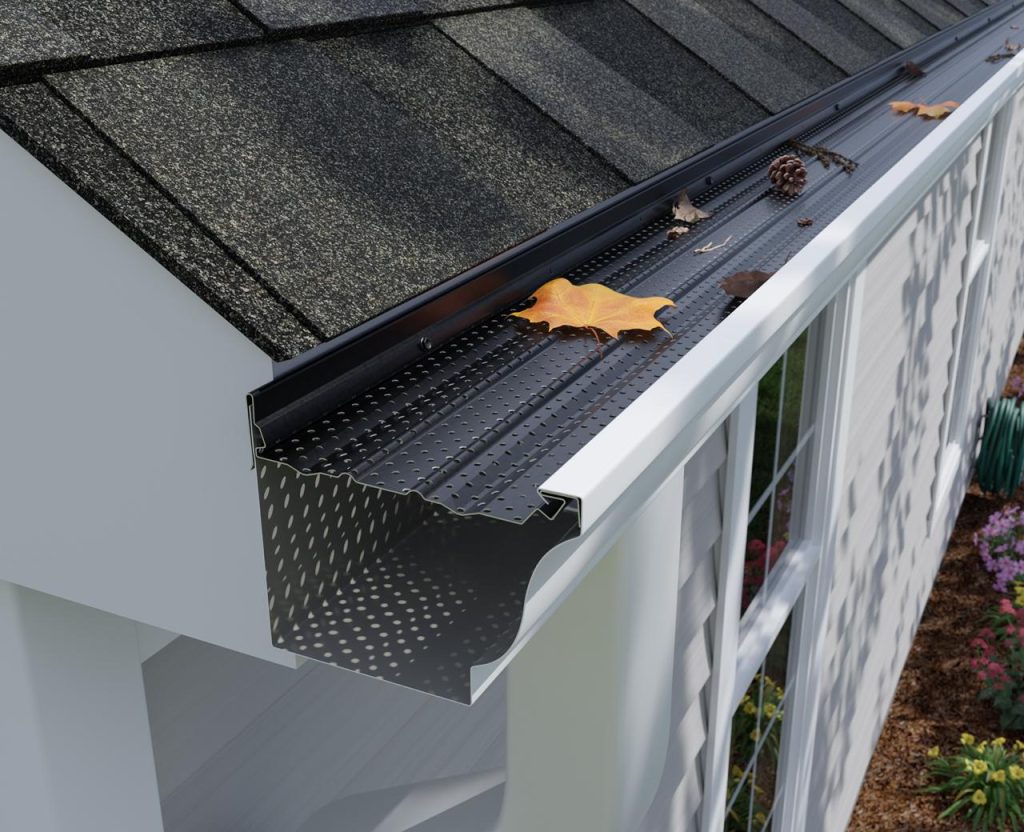
The Fine Debris Filter is a screen layer that mounts on top of the base Sasquatch aluminum cover. It shifts the fuel load off the perforations in the base cover and onto a fine mesh that sheds the debris rather than trapping it (E-Z Gutter Guard). The base product handles bulk debris. The filter handles fine debris that would otherwise nest in the perforations and mat over the top of the cover.
The failure mode the Fine Debris Filter prevents is not obvious. When fine debris accumulates on the cover, it does not block water flow immediately — the base cover keeps working. But over months of accumulation, a mat forms, holds moisture, and turns into a decomposing biofilm on top of the gutter cover. That biofilm is what causes staining on the fascia, ice-dam formation in cold snaps, and biological load that undermines the aluminum finish over time.
Where in Texas the filter is worth specifying
Three geographies drive most Fine Debris Filter specifications:
- East Texas pine belt. Tyler, Jasper, Newton, San Augustine, and Nacogdoches counties are inside continuous loblolly pine forest. Long pine needles are the exact debris the base perforation size struggles with; the filter shifts the debris off the perforations.
- Central Texas oak canopy. Live oak pollen in March and April is a fine, granular load that infiltrates any perforated aluminum cover. Properties in central Austin, San Antonio, and the Hill Country under mature live oak canopy see this load annually (City of Austin pollen summary).
- Hill Country cedar and juniper. Ashe juniper and cedar drop small berries and fine needles that behave like pine needles but on a smaller size scale. The filter screen catches them before they lodge in the perforations.
How the filter interacts with the WUI specification
The Fine Debris Filter and the WUI-hardened specification (see the earlier CCSI post on ASTM E2768 and E2886) reinforce each other. In a mapped WUI zone with pine or juniper overhead, the base ember-intrusion certification is more effective when there is less fuel accumulation on top of the cover. The filter reduces the fuel load; the base cover blocks ember intrusion. Together they compound the risk reduction on a property that carries both a debris exposure and a WUI exposure.
The decision framework for specifiers
Four questions determine whether to add the filter option:
- Is the property under mature pine, oak, cedar, or juniper canopy within 30 feet? Yes = filter recommended.
- Does the property already have a documented gutter cleaning line item at 4+ cleanings per year? Yes = filter is a maintenance cost offset.
- Is the property in a mapped WUI zone? Yes = filter pairs with the .022″ Arctic Extreme heavy-duty thickness for a fully hardened specification.
- Does the property owner care about long-term fascia and cover appearance? Yes = filter prevents the biofilm accumulation that stains fascia over time.
Two or more yeses on that framework is the practical threshold for adding the filter to the specification.
Coordination with the roofing GC
The Fine Debris Filter is a spec-time decision, not a retrofit decision. It has to be ordered with the base Sasquatch install; retrofitting it later requires a fascia-line access window. On a new commercial project, add the filter to the initial submittal — the roofing GC or the gutter installer sequences the install without the second visit (Roofing Contractor).
Where CCSI fits
Construction Component Sales Inc. is the CCSI-side representative for Sasquatch across Texas commercial projects. On a Fine Debris Filter specification, that means the canopy exposure assessment, thickness selection, and filter add-on are packaged on a single submittal — not three separate lookups the specifier has to reconcile. See the full CCSI E-Z Gutter Guard product line.
Frequently asked questions
Can the Fine Debris Filter be added after the base Sasquatch is installed?
It can, but it requires a second fascia-line access window and adds labor cost. The economical path is to spec it with the initial install.
Does the filter reduce water flow into the gutter?
No. The filter mesh is engineered to shed water at rain-event flow rates. It reduces debris load, not water throughput.
Is the filter required on WUI-exposed properties?
Not required by code, but recommended. In a mapped WUI zone with pine or juniper canopy, the filter pairs with the heavy-duty .022-inch thickness for a fully hardened commercial specification.
How does the filter affect the transferable warranty?
The base Sasquatch lifetime limited transferable warranty covers the aluminum cover. Filter-specific warranty terms are documented separately on the submittal.
Looking for a product or a quote?
Tell us about your project and we'll help you source the right building product.