WUI Exposure and Sasquatch: What ASTM E2768 and E2886 Actually Mean for Texas Commercial Roofs
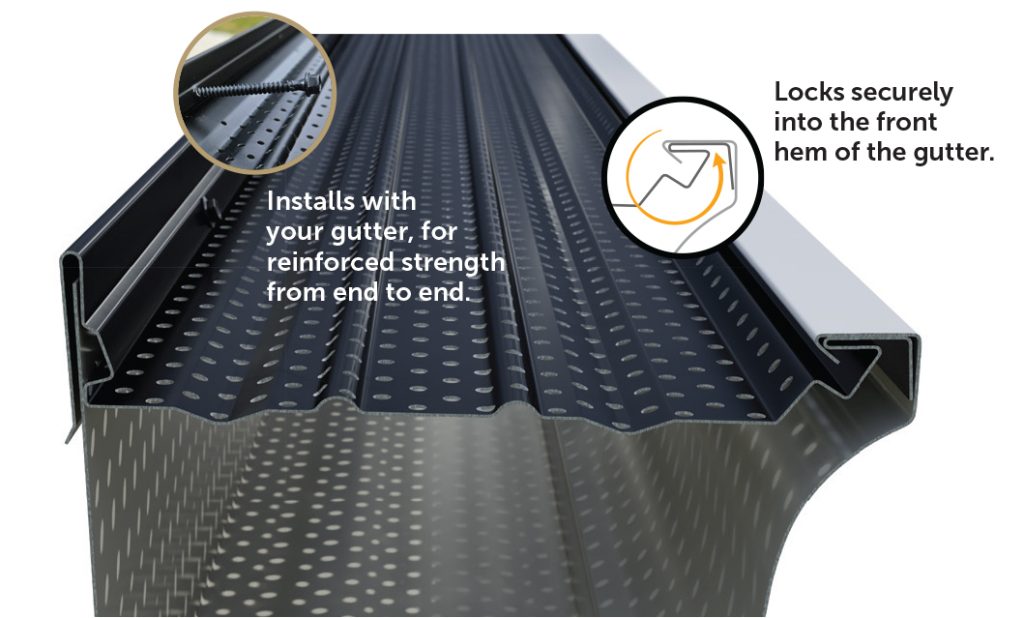
Every commercial specifier in Texas will eventually have to answer a WUI question from an underwriter or an owner: what does the roof edge do when an ember lands on it? Sasquatch's response to that question is documented in two ASTM test standards. This post breaks down what E2768 and E2886 actually test, why they matter for a Texas commercial specification, and where the WUI risk map is trending.
ASTM E2768 — the extended flame-spread test
ASTM E2768 is the 30-minute extended duration Steiner tunnel test. It is a modification of the ASTM E84 flame-spread test that adds duration to identify materials that resist ignition and flame spread over a sustained fire exposure, not just a short ignition event (ASTM International E2768). A material that passes E2768 with a flame-spread index at the low end of the Class A range is a material that will not become a wick during a prolonged roof-edge fire.
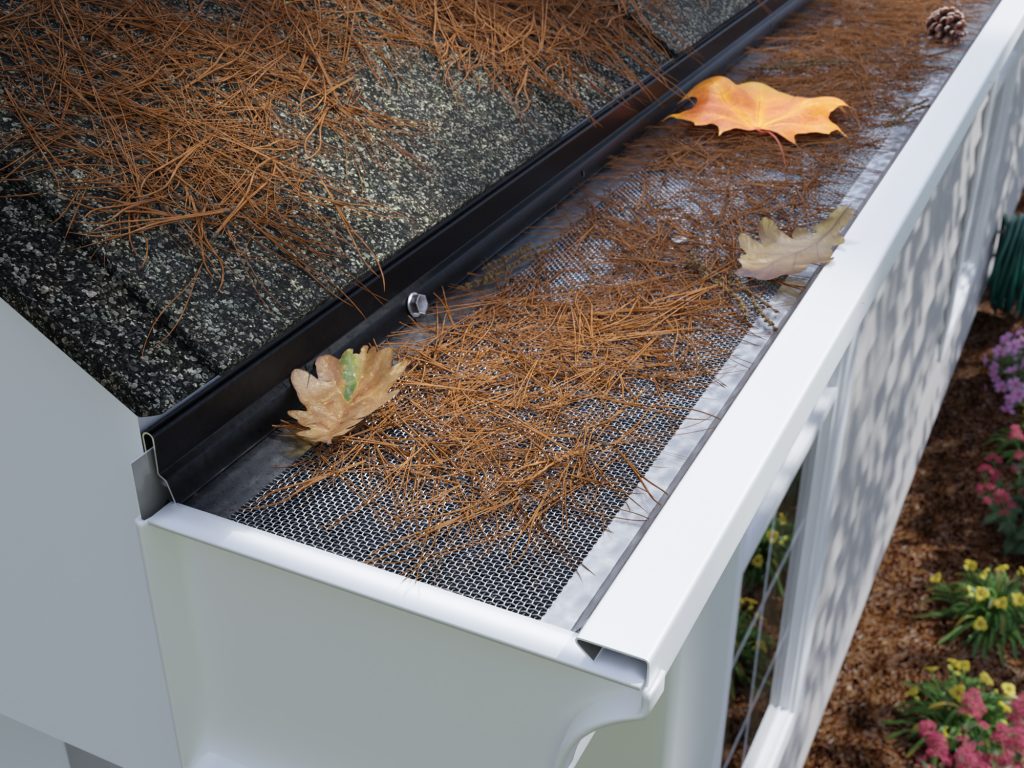
For a gutter protection product, this matters because the gutter is a topological trap for dry debris. If the debris ignites and the cover material also feeds the flame, the roof edge becomes a linear firebrand generator across the length of the building. A cover that meets E2768 does not.
ASTM E2886 — the ember intrusion test
ASTM E2886 tests whether a ventilation or opening assembly resists ember intrusion into an enclosed space under wind-driven conditions. The test protocol subjects the assembly to a stream of glowing embers and wind loading (ASTM International E2886).
Gutters and the space behind them qualify as opening assemblies for the purposes of WUI hardening. A gutter guard that meets E2886 is documented to prevent embers from entering the gutter channel and igniting the debris underneath. For a Texas commercial roof edge, that is the difference between an ember landing on the assembly and an ember starting a fire inside the assembly. Sasquatch documents compliance with both standards on the manufacturer's product page (E-Z Gutter Guard).
Where the WUI risk map is heading in Texas
The Texas WUI footprint is expanding measurably. Texas A&M Forest Service mapping now identifies significant WUI zones across the Hill Country, the East Texas piney woods, the Cross Timbers, and portions of West Texas where mesquite and prairie grass provide continuous fuel loads (Texas A&M Forest Service). Commercial development pressure into these zones — distribution warehouses, resort properties, workforce housing, industrial parks — keeps pushing new commercial roofs into the risk footprint.
Insurance carriers are responding. Commercial property underwriters in Texas increasingly require documentation of ember-resistant roof-edge assemblies for new construction and for renewals in mapped WUI zones (Insurance Information Institute). "Documentation" here means ASTM certification numbers on the specification, not a marketing claim.
The commercial underwriting picture
Commercial insurance treatment of WUI risk has shifted in the last three renewal cycles. Where WUI was previously a residential-carrier concern, commercial carriers now underwrite it explicitly for warehouse, hospitality, workforce housing, and small industrial properties in mapped zones. Renewals inside a WUI band without documented ember-resistant edge details are seeing premium adjustments, coverage carve-outs, or non-renewal in the most exposed corridors (Insurance Information Institute wildfire statistics).
The practical effect on a Texas commercial property portfolio: gutter protection is now a line item on the underwriting submittal, not a maintenance detail. Property managers renewing multi-property portfolios in Hill Country, East Texas, and the Cross Timbers are pre-packaging the ASTM documentation with the underwriting file to keep coverage terms stable.
What a WUI-hardened Sasquatch specification looks like
Three items go on the specification sheet:
- Thickness. Specify the .022″ Arctic Extreme heavy-duty aluminum for any project inside a mapped WUI zone. The higher gauge resists deformation under thermal loading better than the standard .019″ specification.
- Fine Debris Filter. Add the Fine Debris Filter option for any property with pine, oak, or mesquite canopy directly overhead. The filter screen shifts the fuel load off the top of the gutter cover before it can accumulate.
- Fascia attachment inspection cycle. Because Sasquatch is fascia-mounted and hangerless, the annual inspection is a fascia-line walk. On a WUI-exposed roof, that inspection is documented and dated for the insurance file.
Where CCSI fits
Construction Component Sales Inc. is the CCSI-side representative for Sasquatch across Texas commercial projects. On a WUI-hardened specification, that means the ASTM documentation, thickness selection, and Fine Debris Filter add-on are packaged on the same submittal — not three separate lookups the specifier has to chase. See the full CCSI E-Z Gutter Guard product line.
Frequently asked questions
Does ASTM E2886 mean the whole roof is ember-resistant?
No. E2886 tests the specific opening assembly — in this case the gutter cover. Achieving full WUI-hardened roof-edge assemblies requires coordinating the gutter cover with roof deck, drip edge, and eave detailing.
Is the .022-inch Arctic Extreme thickness required for WUI?
It is not required by code, but it is the recommended specification for any project inside a mapped Texas WUI zone or on a property with a documented WUI underwriting condition.
Which Texas counties are in the highest-risk WUI band?
The Hill Country counties west of Austin (Blanco, Burnet, Llano, Gillespie), the East Texas pine belt (Tyler, Jasper, Newton), and portions of the Cross Timbers north and west of Fort Worth carry the highest exposure profile.
Are the ASTM certifications applicable to any Sasquatch install?
Yes. The certification is a property of the product line itself, not a specific installation. The install detail must still match the tested configuration — which is what CCSI submittals confirm.
Looking for a product or a quote?
Tell us about your project and we'll help you source the right building product.